
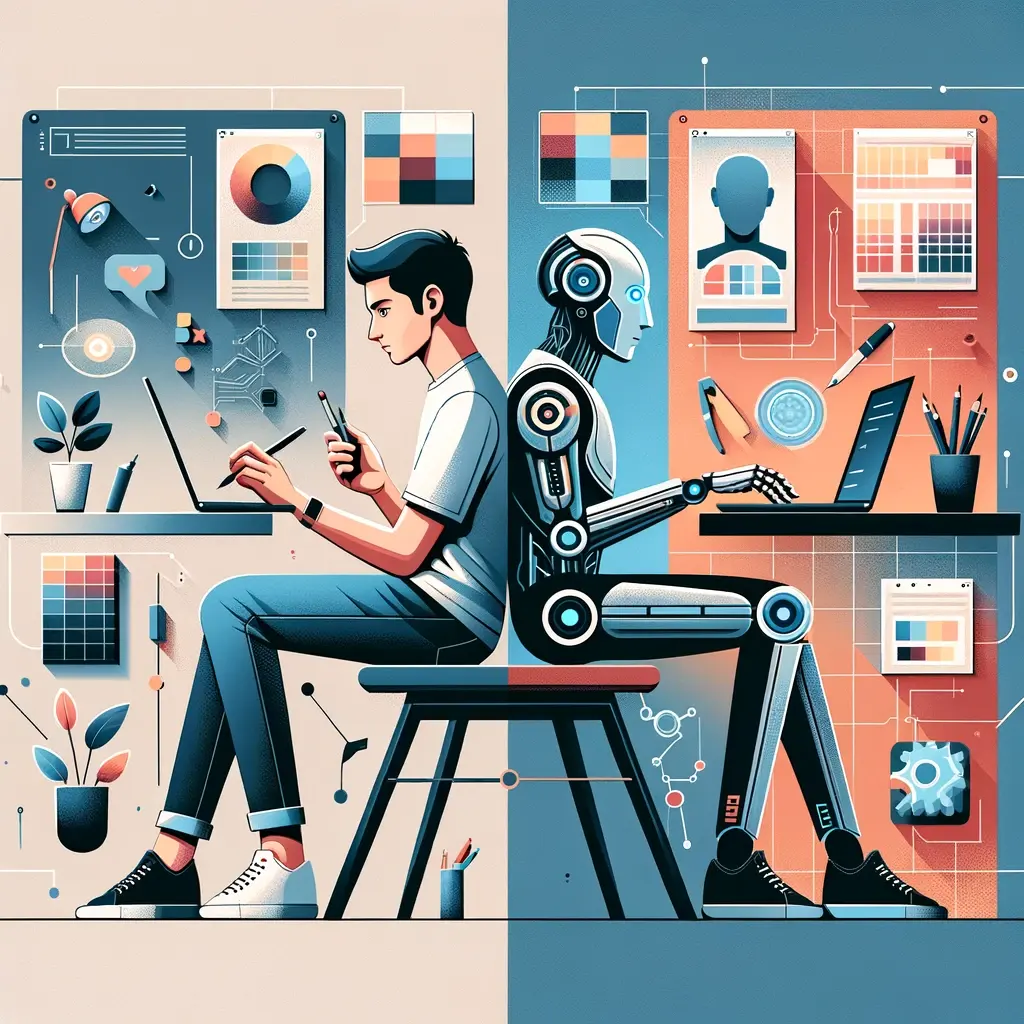
In an era where digital landscapes evolve rapidly, a question often arises: Are web designers becoming obsolete? This thought isn’t just a fleeting concern but a reflection of the immense changes sweeping through the web development industry. The catalysts of this transformation are two powerful forces: Artificial Intelligence (AI) and Do-It-Yourself (DIY) web builders.
Once a figment of sci-fi imagination, AI is now a tangible reality, reshaping how websites are constructed. Its capabilities, ranging from automating mundane tasks to generating sophisticated design elements, suggest a future where the role of human designers could be significantly altered. On the other hand, DIY web builders have democratised web design, enabling individuals and small businesses to craft websites without a single line of code.
Yet, the question remains: Does this technological advancement signal the end of traditional web design as we know it, or does it herald a new era where human creativity and AI efficiency coexist? Let's explore what the future holds for professional web designers in a world leaning towards automation.
1Current State of Web Development and Design
DIY (Do-It-Yourself) website building platforms have significantly altered the web development field. These platforms allow individuals and businesses to design and launch websites using user-friendly drag-and-drop interfaces with no coding or technical skills required.
The Limits of Template-Based DIY Builders
While these platforms offer low initial costs, they come with critical business limitations:
Restricted Design Flexibility
Predefined templates restrict deep customization, making it challenging for ambitious brands to establish a memorable identity that stands out from competitor clones.
Lack of Polish & Brand Perception
Without nuanced design hierarchy, custom vector assets, and bespoke UX decisions, DIY websites often feel unfinished, directly affecting customer conversion rates.
Scalability & Platform Lock-in
As a business expands, adding custom API integrations, dynamic database queries, and advanced SEO architecture becomes difficult or impossible on closed-source DIY builders.
2The Role of Artificial Intelligence in Web Development
Artificial Intelligence is revolutionising development workflows by automating repetitive grunt work, enhancing code generation, and assisting in responsive layout prototyping.
✔ Automated Routine Tasks: Image compression, asset formatting, boilerplate code generation, and cross-browser regression testing.
✔ Data-Driven Insights: Analysing visitor heatmaps and behaviour patterns to suggest UX layout adjustments.
✔ Rapid Prototyping: Creating initial layout sketches and component scaffolds in minutes rather than hours.
The Fundamental Limitations of AI
Crucially, AI cannot replicate human judgment, empathy, and cultural intuition. AI relies entirely on past data patterns; it cannot pioneer completely novel aesthetics, nor can it conduct nuanced discovery conversations with a local business owner to translate their real-world vision into a trustworthy digital presence.
3Advantages of Professional Web Designers Over AI & DIY Builders

- Human Touch & Emotional Connection: Designing visual systems that evoke trust, credibility, and brand loyalty.
- Bespoke Customisation: Tailoring every pixel, animation, and CTA flow specifically to the client's business goals.
- Creative Problem Solving: Inventing unique layout strategies and custom brand assets that break through industry noise.
- Direct Communication & Partnership: A reliable specialist who understands your market, handles emergency fixes, and guides your long-term digital growth.
4Web Designers Adapting to Technological Advances
History shows that transformative technologies create higher demand for skilled specialists rather than eliminating them. A recent industry study showed that over 93% of web designers use AI tools to augment their creative workflow.
By leveraging AI for automated tasks, human designers spend more time where it matters most: strategy, bespoke branding, user conversion psychology, and high-touch client relationships.
Future Outlook & Conclusion
Are web designers becoming obsolete? No. The tools we use are changing rapidly, but the demand for bespoke, high-converting, and human-crafted websites is stronger than ever.
The future of web development belongs to the synergy between AI efficiency and human creativity—designers who leverage cutting-edge tools to deliver tailored digital experiences that connect with real people.